01
Classic Fresh Guacamole
Mashed ripe Hass avocados blended with diced tomatoes, red onion, fresh cilantro, lime juice, and a pinch of sea salt.
Avocados are creamy, nutrient-dense fruits that stand out from almost all other fruits. While most fruits are mostly water and natural sugar, avocados are packed with heart-healthy monounsaturated fats (oleic acid), dietary fiber, and essential vitamins. Clinical research published in the Journal of the American Heart Association and the Journal of Nutrition shows that adding avocados to your diet helps lower bad cholesterol, supports heart health, and dramatically increases how well your body absorbs antioxidants from other vegetables.
The primary fat in avocados is oleic acid, the same heart-healthy monounsaturated fat found in extra virgin olive oil. Oleic acid provides smooth energy and acts as a natural booster for fat-soluble vitamins and antioxidants.
The nutritional values below represent official data from the USDA FoodData Central database for 100 grams of raw Hass avocado (about half a medium avocado).
| Nutrient | Amount (per 100g) | Amount (per 1/2 medium Hass avocado (100g)) | % Daily Value (%DV) | Why Your Body Needs It |
|---|---|---|---|---|
| Calories | 160 kcal | 320 kcal | — | Steady, clean energy powered by healthy fats |
| Water Content | 73.2g | 146.4g | — | Keeps tissues hydrated and comfortable |
| Total Carbohydrates | 8.5g | 17.0g | — | Mostly dietary fiber with minimal sugar |
| Dietary Fiber | 6.7g | 13.4g | — | Exceptional digestive support and fullness |
| Total Sugars | 0.7g | 1.4g | — | Virtually sugar-free fruit option |
| Total Healthy Fats | 14.7g | 29.4g | — | Heart-friendly monounsaturated oleic acid |
| Oleic Acid (Omega-9) | 9.8g | 19.6g | — | Healthy fat that keeps blood vessels flexible |
| Protein | 2.0g | 4.0g | — | Higher protein than most fresh fruits |
| Glycemic Index (GI) | 15 (Low) | 15 (Low) | Low | Zero impact on blood sugar spikes |
| Potassium | 485mg | 970mg | 10% | Contains more potassium than a banana |
| Magnesium | 29mg | 58mg | 7% | Supports muscle relaxation and nerves |
| Vitamin E | 2.07mg | 4.14mg | 14% | Protects cell membranes from oxidative stress |
| Vitamin K1 | 21.0µg | 42.0µg | 18% | Supports healthy blood clotting and bones |
| Folate (Vitamin B9) | 81µg | 162µg | 20% | Essential for cell growth and fetal health |
The reference matrix below outlines how avocados impact everyday health management, based on clinical trials and dietary guidelines.
| Condition / Disease | Impact | General Guidance | Why (Mechanism + Verdict) |
|---|---|---|---|
| Diabetes & Blood Sugar | Positive | Enjoy half an avocado daily | Great dietary choice. Extremely low sugar (0.7g/100g) and high fiber keep blood sugar completely stable. |
| High Cholesterol | Positive | Eat 1/2 to 1 avocado daily | Promising clinical evidence. Monounsaturated fats and beta-sitosterol help lower LDL cholesterol and improve lipid profiles. |
| Heart & Vascular Health | Positive | Daily whole food fat source | Strong supportive evidence. Rich potassium (485mg/100g) and oleic acid support healthy blood pressure and flexible arteries. |
| Weight Loss & Appetite | Positive | Eat 1/2 avocado with meals | Helpful fullness option. High fiber and healthy fats slow digestion, helping you feel satisfied for hours so you naturally eat less. |
| Gut Microbiome Health | Positive | Include in regular meals | Good digestive support. 6.7g of dietary fiber per 100g feeds beneficial stomach microbes and promotes regular bowel movements. |
| Pregnancy | Positive | Wash skin; eat daily | Highly recommended. Supplies natural Folate (81µg/100g), potassium, and healthy fats essential for fetal neural development. |
| Kidney Disease (CKD) | Caution | Monitor daily portions | Requires tracking. High in potassium (485mg/100g), which must be carefully limited in late-stage renal diets. |
| Infants & Toddlers | Positive | Mash smooth for weaning | Ideal first food. Soft, creamy texture packed with healthy brain-building fats and gentle nutrients for baby weaning. |
| Pets (Dogs & Cats) | Caution | Keep away from pets | Toxic skin & pit. Avocado flesh in tiny amounts is rarely harmful, but the pit, skin, and leaves contain persin, which can upset pet stomachs. |
| IBS (FODMAP Diets) | Caution | Limit to 1/8 avocado (30g) | Portion sensitive. Avocados contain sorbitol (a polyol). Small 30g portions are Low-FODMAP, but larger servings may trigger gas in sensitive gut patients. |
| Medication Interactions | Caution | Maintain steady intake | Vitamin K content. Contains Vitamin K1 (21µg/100g). If taking blood thinners like Warfarin, keep your daily avocado intake consistent. |
Explore visual varieties and characteristics.
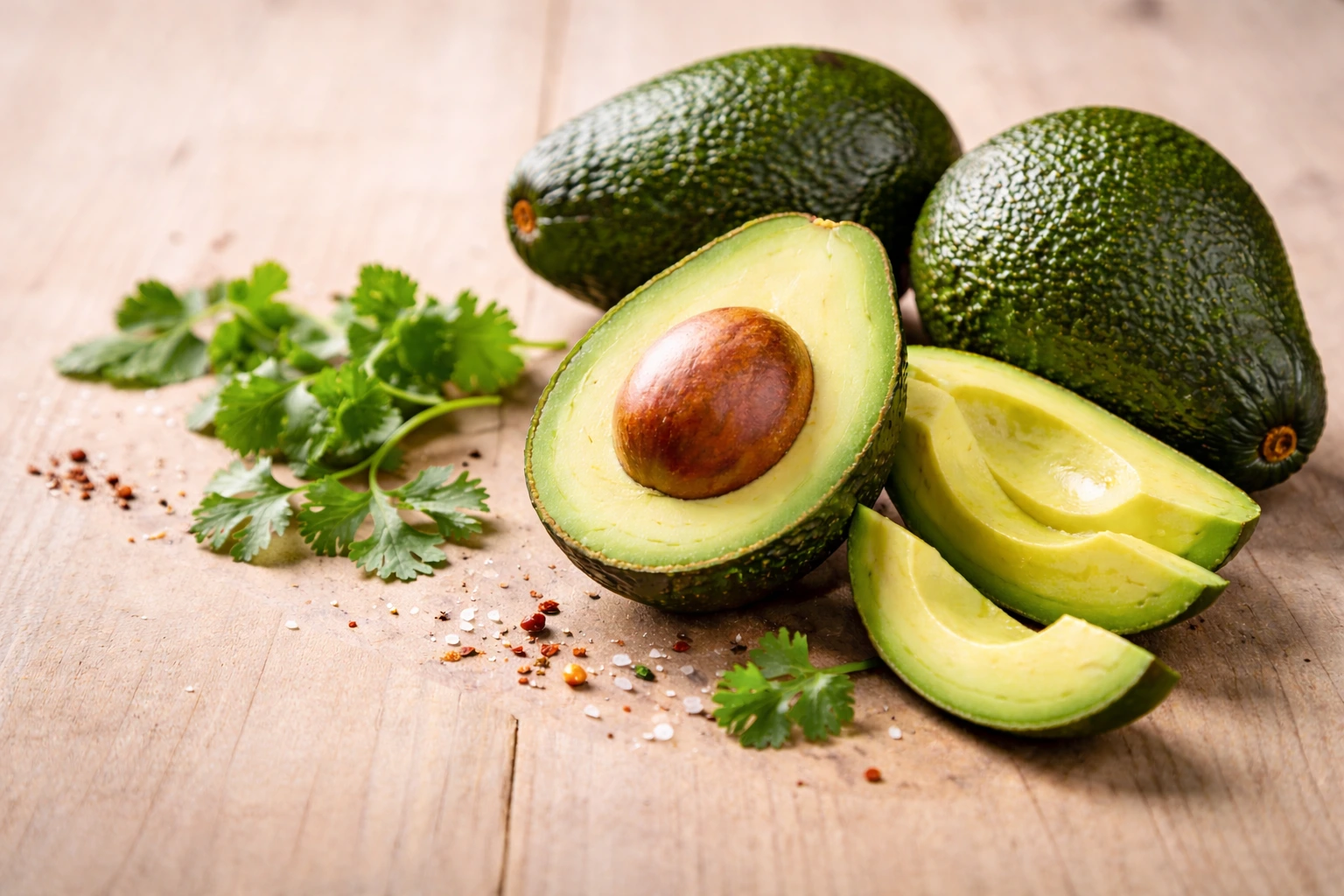
The dark green layer of flesh right beneath the skin contains the highest concentration of lutein, beta-carotene, and antioxidants. Use the nick and peel method to keep that rich green layer intact!
Always add avocado slices to green salads or raw vegetable platters. The healthy fats increase your absorption of fat-soluble vitamins (A, D, E, K) and antioxidants by 3x to over 15x!
Once sliced, exposure to oxygen turns avocado flesh brown. Squeeze fresh lemon or lime juice over exposed surfaces; the Vitamin C (ascorbic acid) prevents oxidation.
Store firm avocados at room temperature. Once ripe, place whole unpeeled avocados in the refrigerator crisper drawer to keep them perfectly fresh for up to 5 days.
Traditional preparations and global recipes celebrating wholesome ingredients, balanced textures, and rich culinary heritage.
Mashed ripe Hass avocados blended with diced tomatoes, red onion, fresh cilantro, lime juice, and a pinch of sea salt.
Whole grain sourdough toasted and topped with mashed avocado, a drizzle of extra virgin olive oil, red pepper flakes, and a poached egg.
Blend 1/2 a ripe avocado with spinach, frozen pineapple chunks, lime juice, and coconut water for a silky, ultra-satisfying drink.
Sliced avocado paired with ripe tomatoes and fresh basil, dressed with olive oil and balsamic vinegar to maximize lycopene absorption.
According to Healthline and clinical studies, avocados are rich in monounsaturated fats, fiber, potassium, and antioxidants. Eating avocados helps support healthy LDL cholesterol, improves heart health, aids digestion, and dramatically boosts antioxidant absorption from other foods.
Yes! Although avocados are higher in calories due to their healthy fats, their rich combination of monounsaturated fats and dietary fiber (6.7g per 100g) slows digestion and promotes long-lasting fullness, helping prevent overeating.
Yes! A 100g serving of avocado supplies 485mg of potassium (10% DV), compared to 358mg in 100g of banana. Potassium helps support healthy blood pressure and fluid balance in your body.
Yes. Avocados have a very low Glycemic Index (GI 15) and contain less than 1 gram of sugar per 100g. The healthy fats and fiber prevent blood sugar spikes, making avocado an ideal food for blood sugar management.
Raw is best! Heat can break down delicate monounsaturated fats and Vitamin E. Enjoying avocados raw in salads, spreads, and smoothies preserves their full nutritional value.
When sliced, an enzyme in avocados called polyphenol oxidase reacts with air. While browning is harmless, drizzling lemon juice over sliced avocado prevents browning because Vitamin C acts as a natural antioxidant shield.
Half a medium Hass avocado (100 grams) packs an incredible nutritional punch with just 160 calories! The nutrition of avocado includes **14.7 grams of heart-healthy monounsaturated fats** (mostly oleic acid), **6.7 grams of dietary fiber**, and **less than 1 gram of natural sugar**. Avocados are also loaded with essential vitamins and minerals—delivering **485mg of potassium** (more than a banana!), 81µg of folate, 2mg of Vitamin E, and 29mg of magnesium.
Have a moment? Share your feedback or suggestions via Google to help us produce even higher quality, evidence-based nutrition guides.
No saved articles yet.
Click the bookmark button 🔖 inside any article to save it here for offline reading!
Hi! I am Mapple AI, your food science research companion. Ask me anything about biomolecules, organic diet patterns, or longevity recipes.