01
Okinawan Goya Champuru Stir-Fry
Explore Recipe GuideTraditional Okinawan stir-fry of salted sliced bitter melon, firm tofu, scrambled eggs, and toasted sesame oil.
Bitter melon (Momordica charantia), also known as bitter gourd or karela, is a tropical vine vegetable celebrated in Asian, African, and Caribbean traditional medicine. Belonging to the Cucurbitaceae gourd family, bitter melon is packed with specialized insulin-mimetic compounds—including charantin, vicine, and a plant protein called polypeptide-p. Clinical reviews published in International Journal of Environmental Research and Public Health and the Cochrane Database of Systematic Reviews demonstrate that bitter melon compounds stimulate glucose uptake in peripheral muscle cells, enhance insulin secretion, and support healthy post-meal blood sugar levels.
Bitter melon works through multiple complementary biochemical pathways to regulate blood glucose.
Note on Clinical Evidence: While laboratory models demonstrate insulin-mimetic mechanisms for charantin and polypeptide-p (PMID 24566057), high-quality systematic reviews of human trials (PMID 20166099) conclude that current evidence is insufficient to prove a significant clinical blood sugar reduction in type 2 diabetes.
The nutritional breakdown below represents official data from the USDA FoodData Central database for 100 grams of raw bitter melon compared to 1 cup of chopped raw bitter melon (93g).
| Nutrient | Amount (per 100g) | Amount (per 1 cup chopped raw bitter melon (93g)) | % Daily Value (%DV) | Why Your Body Needs It |
|---|---|---|---|---|
| Calories | 17 kcal | 16 kcal | — | Exceptionally light, low-sugar vegetable energy |
| Water Content | 94.0g | 87.4g | — | High cellular hydration |
| Total Carbohydrates | 3.7g | 3.4g | — | Low-carb vegetable rich in insoluble plant fiber |
| Dietary Fiber | 2.8g | 2.6g | 10% | Supports digestive regularity and slows carbohydrate digestion |
| Total Sugars | 1.0g | 0.93g | — | Virtually sugar-free |
| Protein | 1.0g | 0.93g | 2% | Supplies basic plant amino acids |
| Glycemic Index (GI) | 15 (Low) | 15 (Low) | Low | Zero impact on blood glucose spikes |
| Vitamin C | 84.0mg | 78.1mg | 87% | Exceptionally rich antioxidant protecting vascular walls |
| Vitamin A (Beta-Carotene) | 24.0µg RAE | 22.3µg RAE | 2% | Supports eye health and skin integrity |
| Folate (Vitamin B9) | 72µg | 67µg | 17% | Essential for cellular division and DNA repair |
| Potassium | 296mg | 275mg | 6% | Electrolyte supporting fluid balance and blood pressure |
The reference matrix below outlines how fresh and cooked bitter melon fits into everyday health management, based on clinical reviews and dietary guidelines.
| Condition / Disease | Impact | General Guidance | Why (Mechanism + Verdict) |
|---|---|---|---|
| Type 2 Diabetes & Pre-Diabetes | Caution | Culinary use only; consult MD | Mixed / Inconclusive human evidence. Plant compounds show insulin-mimetic activity in lab assays (PMID 24566057), but a Cochrane meta-analysis (PMID 20166099, 479 participants) found no statistically significant blood sugar drop vs placebo or medication. |
| Weight Management | Positive | Include in low-calorie meals | Good supportive evidence. Low calorie (17 kcal/100g) and high fiber content help promote satiety and prevent glycemic spikes. |
| High Vitamin C Intake | Positive | Eat fresh cooked portions | Strong evidence. 1 cup raw supplies 87% DV Vitamin C, protecting endothelial cells from glucose-induced oxidative stress. |
| Pregnancy | Caution | Avoid large medicinal amounts | Uterine stimulant caution. Traditional medicine cautions against concentrated bitter melon intake during pregnancy due to potential uterine contractions. |
| Hypoglycemia (Medication Risk) | Caution | Monitor blood glucose levels | Additive effect with insulin. Patients on insulin or sulfonylureas should monitor blood sugar closely when adding bitter melon to avoid low blood sugar. |
Explore visual varieties and characteristics.
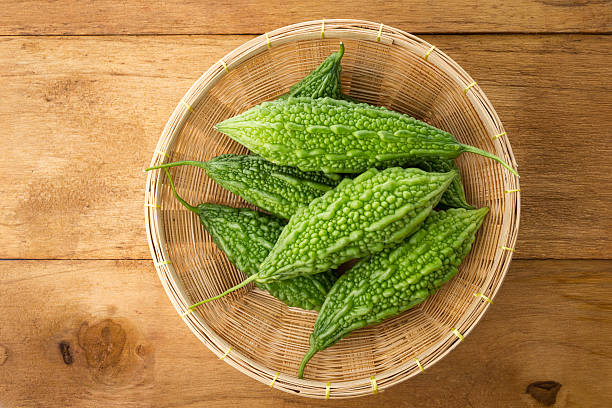
Sprinkle sliced bitter melon with sea salt, rest for 15 minutes, and squeeze out excess bitter liquid before cooking to soften harsh flavor.
The outer green skin contains concentrated charantin, vicine, and Vitamin C. Avoid peeling away the nutritious ridge layer.
Cook bitter melon in sesame oil, ghee, or extra virgin olive oil to improve fat-soluble saponin and antioxidant absorption.
Because bitter melon enhances insulin sensitivity, monitor blood glucose closely if combining with prescription hypoglycemic medications.
Traditional preparations and global recipes celebrating wholesome ingredients, balanced textures, and rich culinary heritage.
Traditional Okinawan stir-fry of salted sliced bitter melon, firm tofu, scrambled eggs, and toasted sesame oil.
Crisp thinly sliced bitter gourd sautéed with onions, turmeric, cumin seeds, and tangy amchur (dry mango powder).
Tender whole bitter gourds stuffed with roasted spiced chickpea flour, fennel, and coriander, pan-roasted until golden.
Freshly pressed bitter melon juice balanced with crisp green apple, cucumber slices, and freshly squeezed lemon.
According to Healthline and clinical studies, bitter melon is rich in charantin, vicine, polypeptide-p, and Vitamin C. Eating bitter melon supports healthy blood sugar balance, insulin sensitivity, and vascular health.
Bitter melon contains **polypeptide-p** (an insulin-mimetic protein) and **charantin**, which activate the AMPK enzyme to transport glucose out of your bloodstream into muscle cells (PMID 24566057).
Slice the bitter melon, sprinkle generously with salt, let sit for 15 to 20 minutes, then squeeze out the bitter liquid and rinse with cold water before cooking.
Pregnant women should avoid large medicinal amounts of bitter melon due to traditional concerns regarding uterine stimulation. Standard small culinary portions should be discussed with a physician.
Yes! 100 grams of raw bitter melon supplies **84mg of Vitamin C (93% DV)**, making it one of the richest vitamin C sources among all gourd vegetables.
Have a moment? Share your feedback or suggestions via Google to help us produce even higher quality, evidence-based nutrition guides.
No saved articles yet.
Click the bookmark button 🔖 inside any article to save it here for offline reading!

Hi! I am Mapple AI, your food science research companion. Ask me anything about biomolecules, organic diet patterns, or longevity recipes.