01
Tart Cherry Recovery Elixir
Cold-pressed tart Montmorency cherry juice mixed with sparkling water, a squeeze of fresh lime, and fresh mint.
Cherries are among the most vibrant, nutrient-dense summer fruits on earth. Available as sweet dark cherries (Prunus avium) or tart Montmorency cherries (Prunus cerasus), these glossy stone fruits are packed with powerful bioactive phytochemicals—specifically cyanidin-3-glucoside anthocyanins, hydroxycinnamic acids, quercetin, and naturally occurring melatonin.
Exploring cherries benefits (and the specific benefits of cherry fruit) demonstrates how regular consumption helps reduce circulating uric acid levels, lower joint inflammation, enhance sleep duration, and accelerate post-exercise muscle recovery according to clinical human trials.
The clinical reference matrix below summarizes the impact of fresh and tart cherries across key human health conditions:
The health benefits of cherry fruit are validated by numerous clinical human trials across three main physiological pathways:
Gout is an agonizing form of inflammatory arthritis caused by hyperuricemia (excessive uric acid accumulating as monosodium urate crystals in joints). In a landmark clinical study published in Arthritis & Rheumatism (Zhang et al. 2012, PMID: 23023772) involving 633 gout patients, consuming cherries over a 2-day period was associated with a 35% lower risk of gout attacks. When combined with allopurinol medication, the risk of gout flare-ups dropped by 75%.
Montmorency tart cherries are among the very few plants containing meaningful concentrations of exogenous melatonin (N-acetyl-5-methoxytryptamine). In a double-blind crossover trial published in the European Journal of Nutrition (Howatson et al. 2012, PMID: 22038497), subjects consuming tart cherry concentrate experienced significant increases in urinary melatonin levels, leading to a 84-minute increase in total sleep time and improved sleep efficiency score.
High-intensity athletic exercise creates micro-tears in muscle fibers, releasing creatine kinase and inflammatory cytokines (IL-6, TNF-alpha). Clinical trials (Bowtell et al., PMID: 20438322) demonstrate that tart cherry anthocyanins suppress cyclooxygenase enzymes (COX-1 and COX-2) with potency comparable to NSAID medications (ibuprofen), significantly accelerating muscle strength recovery after strenuous training.
The nutritional analysis below represents official data from the USDA FoodData Central database for 100 grams of fresh sweet cherries (approximately 12 to 14 pitted fruits) compared to 1 cup (138g):
| Nutrient | Amount (per 100g) | Amount (per 1 cup sweet pitted cherries (138g)) | % Daily Value (%DV) | Why Your Body Needs It |
|---|---|---|---|---|
| Calories | 63 kcal | 87 kcal | — | Light, hydrating stone fruit energy |
| Total Carbs | 16.0g | 22.1g | 8% | Low-GI carbohydrates paired with polyphenols |
| Sugars | 12.8g | 17.7g | — | Natural fruit fructose & glucose |
| Dietary Fiber | 2.1g | 2.9g | 10% | Soluble & insoluble fiber for gut health |
| Protein | 1.06g | 1.46g | 3% | Small natural amino acid contribution |
| Total Fat | 0.20g | 0.28g | <1% | Virtually fat-free |
| GI / GL | — | 22 / 3 | Very Low | Exceptionally low Glycemic Index |
| Vitamin C | 7.0mg | 9.7mg | 11% | Immune defense & collagen synthesis |
| Potassium | 222mg | 306mg | 7% | Vascular pressure & muscle relaxation |
| Copper | 0.06mg | 0.08mg | 9% | Red blood cell & tissue maintenance |
| Vitamin K | 2.1µg | 2.9µg | 2% | Bone matrix synthesis |
| Calcium | 13mg | 20mg | 2% | Bone matrix synthesis |
The clinical reference matrix below summarizes the impact of fresh and tart cherries across key human health conditions:
| Condition / Focus Area | Impact | General Guidance | Why (Mechanism + Verdict) |
|---|---|---|---|
| Gout & High Uric Acid | Positive | Eat 10-12 cherries or 8oz tart juice | Landmark clinical proof. Human trial (PMID: 23023772) showed cherry intake reduces recurrent gout flare-up risk by 35% by promoting renal uric acid excretion. |
| Insomnia & Sleep Quality | Positive | Consume 1 hour before bed | Natural Melatonin Source. Clinical trial (PMID: 22038497) proved tart cherry juice elevates exogenous melatonin levels and increases total sleep time by 84 minutes. |
| Diabetes / Blood Sugar | Positive | Enjoy whole fresh cherries | Very Low GI (22). One of the lowest glycemic fruits. Anthocyanins enhance insulin sensitivity in pancreatic beta cells without causing blood sugar spikes. |
| High Cholesterol & Heart | Positive | Eat daily during summer season | Promising evidence. Cherry polyphenols suppress systemic lipid peroxidation, lower C-reactive protein (CRP), and support arterial compliance. |
| Weight Loss | Positive | Excellent low-calorie dessert | Good dietary choice. At just 63 calories per 100g with a GI of 22, cherries satisfy sweet cravings while providing dense hydration and fiber. |
| Pregnancy | Positive | Wash thoroughly; eat freely | Safe and beneficial. Supplies natural potassium to prevent leg cramps and anthocyanins to protect maternal blood vessels. |
| Gut Dysbiosis | Positive | Eat fresh whole fruits | Prebiotic polyphenol support. Soluble fiber and polyphenols reach the distal colon, stimulating beneficial Bacteroidetes species. |
| Kidney Disease (CKD) | Positive | Safe in standard portions | Moderate potassium (222mg/100g). Fits well into early-to-moderate renal meal plans when portion-controlled. |
| Oral Allergy Syndrome | Caution | Monitor if birch pollen allergic | Cross-reactivity risk. Birch pollen sufferers may experience temporary oral itching due to Pru av 1 allergen protein cross-reactivity. |
| Pets (Dogs) | Avoid Pits & Stems | Keep away from dogs | Toxic Pit Danger. Cherry flesh is non-toxic, but cherry pits contain amygdalin (cyanide) and present severe intestinal blockage risks. |
| IBS (FODMAPs) | Caution | Limit to 5-6 cherries sitting | High Sorbitol Content. Rich in polyols (sorbitol) and fructose, which can cause gas or diarrhea in individuals with active IBS. |
Explore visual varieties and characteristics.
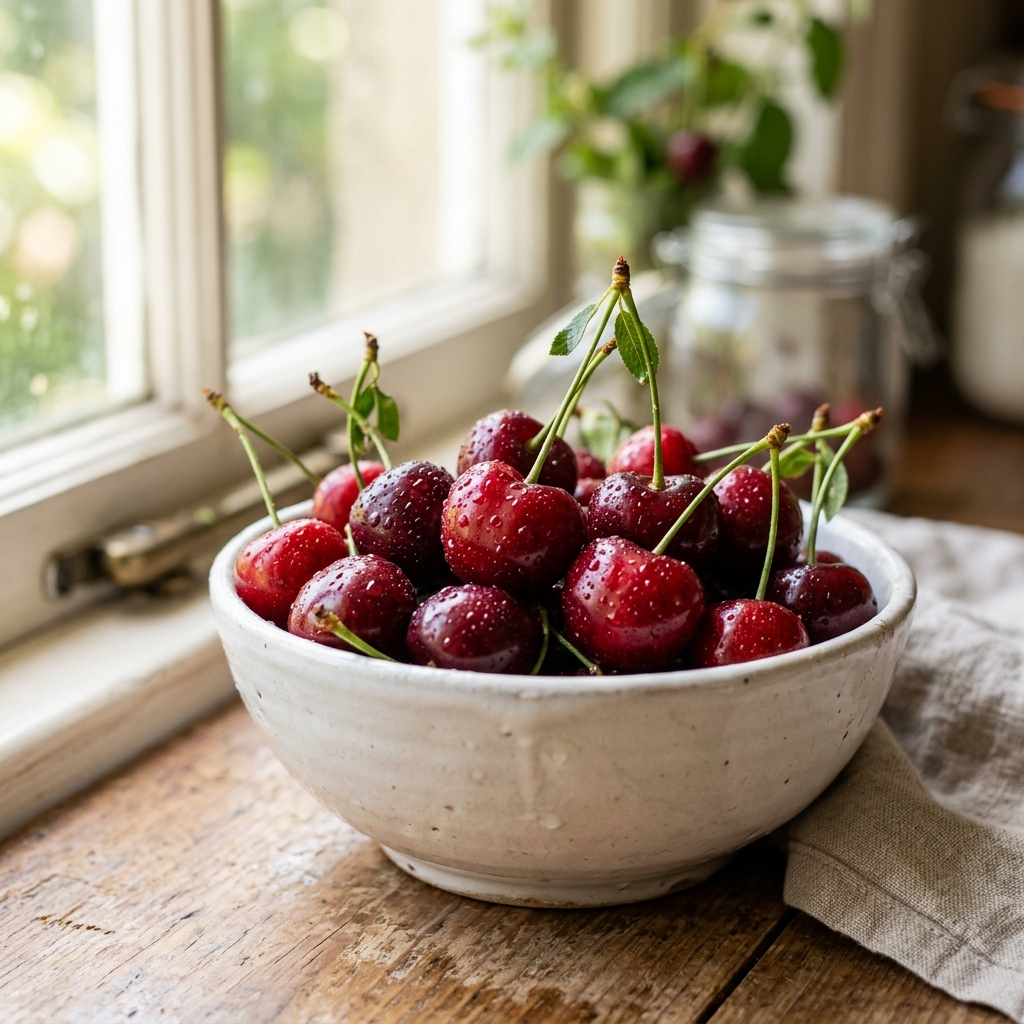
Consume 1 cup of fresh pitted cherries or 8oz of tart cherry juice 1 hour before bed to leverage natural melatonin and tryptophan for deeper restorative sleep.
Always discard cherry pits. Cherry pits contain amygdalin, a cyanogenic compound that releases toxic cyanide if crushed or chewed.
Consume tart cherries or unsweetened concentrate after intense workouts to inhibit COX-2 inflammatory pathways and speed up muscle tissue repair.
Store unwashed cherries in a ventilated container in the refrigerator crisper drawer. Wash under cold running water immediately before eating.
Traditional preparations and global recipes celebrating wholesome ingredients, balanced textures, and rich culinary heritage.
Cold-pressed tart Montmorency cherry juice mixed with sparkling water, a squeeze of fresh lime, and fresh mint.
Traditional French baked custard dessert studded with fresh pitted dark Bing cherries and a hint of vanilla.
Simmered fresh dark cherries reduced with aged balsamic vinegar and rosemary, spooned over wild-caught pan-seared salmon.
Gently warmed pitted cherries simmered with chia seeds and cinnamon, spooned over thick Greek yogurt or morning oats.
Cherries contain high concentrations of anthocyanins and quercetin that inhibit xanthine oxidase (the enzyme responsible for uric acid production) while promoting kidney excretion of excess urate. Clinical trials (PMID: 23023772) show a 35% drop in gout attack risk with regular cherry intake.
Montmorency tart cherries naturally contain bioavailable melatonin and tryptophan. Clinical trials (PMID: 22038497) show that drinking tart cherry juice increases circulating melatonin levels, helping individuals fall asleep faster and stay asleep longer.
Fresh cherries have an exceptionally low Glycemic Index (**GI 22**), making them one of the safest fruits for individuals with Type 2 diabetes or insulin resistance when eaten in normal serving sizes.
No! Cherry pits contain **amygdalin**, a cyanogenic glycoside that breaks down into hydrogen cyanide when crushed or chewed. Always spit out or remove cherry pits before eating.
Have a moment? Share your feedback or suggestions via Google to help us produce even higher quality, evidence-based nutrition guides.
No saved articles yet.
Click the bookmark button 🔖 inside any article to save it here for offline reading!
Hi! I am Mapple AI, your food science research companion. Ask me anything about biomolecules, organic diet patterns, or longevity recipes.