01
Jamun Kala Khatta
A popular South Asian summer drink made with fresh jamun pulp, roasted cumin, black salt, and lemon for a refreshing sweet-sour-spicy profile.
Jamun (Syzygium cumini), also widely known as Java plum, jambolan, or jambul, is a seasonal dark-purple fruit deeply rooted in South Asian food culture. Ripe jamun offers a unique combination of sweet, mildly sour, and astringent flavors. Its intensely colored skin and juicy pulp are packed with natural plant compounds, including anthocyanins and other polyphenols.
Jamun has long attracted scientific attention because traditional preparations made from its fruit, seeds, and leaves have been utilized for generations in South Asian herbal systems, particularly for blood-sugar management. Modern researchers have explored these biological effects, but scientific evidence is far more nuanced than the popular claim that jamun is a “miracle anti-diabetic fruit.”
A 2026 systematic review and meta-analysis of 13 randomized trials involving 802 participants found that Syzygium cumini and related Myrtaceae interventions were associated with a modest reduction in fasting blood glucose. However, the analysis did not find consistent, statistically significant reductions in HbA1c or post-meal glucose levels, and the authors rated the overall certainty of evidence as low to very low due to study limitations, small trial sizes, and short follow-up periods.
This comprehensive guide separates what we know about fresh jamun as a wholesome summer fruit from what laboratory and clinical studies show regarding concentrated extracts and traditional seed powders. It also details jamun’s nutritional profile, growing requirements, culinary traditions, and practical safety considerations.
| Botanical & Cultural Fact | Detail |
|---|---|
| Scientific name | Syzygium cumini (L.) Skeels |
| Plant family | Myrtaceae (Myrtle family) |
| Common names | Jamun, Java plum, Jambolan, Jambul, Black plum |
| Geographic origin | Indian subcontinent and Southeast Asia |
| Fruit color transition | Green when unripe → pink/crimson → deep purple-black when fully mature |
| Flavor profile | Sweet, pleasantly tart, and mildly astringent |
| Edible portion | Juicy fruit pulp surrounding a single hard seed |
| Typical South Asian season | Early to mid-monsoon, commonly June–July |
| Culinary uses | Eaten fresh with black salt, drinks, sherbets, chutney, jam, and preserves |
Native to tropical Asia, jamun trees are treasured for their hardy nature, dense shade, and vibrant monsoon fruit harvest. Today, jamun is cultivated across South and Southeast Asia, tropical Africa, Brazil, and parts of the Caribbean.
One of the most enjoyable and recognizable experiences of eating fresh jamun is how it temporarily turns your tongue, lips, and mouth a vibrant shade of violet-purple.
This color change is caused by anthocyanins—water-soluble plant pigments concentrated in the dark outer peel and juicy flesh of the fruit. Anthocyanins belong to the flavonoid family of polyphenols and are responsible for the rich blue, purple, and crimson hues found in berries, purple grapes, and plums.
When you chew fresh jamun, these natural water-soluble pigments can temporarily stain proteins and tissues in the mouth, producing the characteristic purple color. This staining is completely harmless, natural, and usually fades away on its own within a few hours as saliva and fluids gently wash your mouth.
Jamun’s unique taste and traditional reputation stem from its rich matrix of secondary plant metabolites:
Jamun is rich in anthocyanin pigments, notably delphinidin, petunidin, and malvidin glucosides. These compounds show antioxidant activity in laboratory and food-science studies, which is one reason Jamun’s intensely colored fruit has attracted research interest.
The fruit’s characteristic mouth-drying astringency comes from natural tannins and phenolic acids (such as gallic acid and ellagic acid). These compounds contribute to the plant’s natural defense system and have been studied for their antimicrobial and antioxidant actions in food science research.
Jamun seeds contain a distinct biochemical profile compared to the fruit flesh, featuring compounds such as jamboline and concentrated tannins. In 2026 metabolomic profiling (Kumar et al., Scientific Reports, PMID: 42191812), laboratory research identified specific phytochemicals in Syzygium cumini associated with in vitro α-amylase inhibition and antioxidant actions, clarifying the botanical pathways investigated in laboratory models.
Blood sugar regulation is the most frequently discussed topic surrounding jamun. To understand the science accurately, it helps to examine what human clinical studies and laboratory models actually demonstrate across specific metabolic questions:
| Research Question | What Current Evidence Suggests | Evidence Level & Clarity |
|---|---|---|
| Fasting blood glucose | A 2026 systematic review and meta-analysis of 13 randomized trials (802 participants) found a statistically significant but modest reduction in fasting glucose across Syzygium and related Myrtaceae interventions. | Promising, but modest |
| HbA1c (Long-term control) | The same 2026 meta-analysis found no statistically significant overall reduction in HbA1c across clinical trials. | Insufficient evidence |
| Post-meal (postprandial) glucose | Overall improvement in post-meal glucose spikes was not statistically significant across randomized interventions. | Inconclusive |
| Seed preparations | Seed extracts have demonstrated carbohydrate enzyme inhibition in laboratory assays, but human trials vary widely in formulation and quality. | Promising but heterogeneous |
| Leaf extracts | Laboratory and small clinical trials have examined aqueous leaf extracts on cellular markers, which cannot be directly equated to eating fresh fruit. | Not equivalent to whole fruit |
| Antioxidant & polyphenol activity | Jamun delivers well-documented anthocyanins and phenolics in food-composition analyses. | Strong compositional evidence; clinical disease endpoints less certain |
| Long-term diabetes complications | There is no high-quality clinical evidence showing that jamun prevents diabetic neuropathy, retinopathy, or cardiovascular endpoints. | Not established |
Some popular health articles cite a 2009 study in Fundamental & Clinical Pharmacology (Bopp et al., PMID: 19709327) to claim that eating jamun directly lowers blood sugar and enzymes in humans.
However, the actual scientific paper evaluated an aqueous extract of Syzygium cumini leaves in an in vitro laboratory setting (using concentrations of 60–1000 μg/mL) rather than human volunteers eating fresh jamun fruit. While the researchers found that the leaf extract inhibited adenosine deaminase (ADA) activity and reduced glucose levels in hyperglycemic serum samples, laboratory findings on leaf extracts cannot be assumed to replicate when an individual eats a bowl of fresh fruit.
Jamun is a promising, nutritious whole food, but it is not clinically established as a treatment or cure for diabetes.
A July 2026 systematic review and meta-analysis published in Foods (Duangchan et al., PMID: 42450449) synthesized data from 13 randomized controlled trials involving 802 individuals across Syzygium cumini and related Myrtaceae preparations.
The pooled analysis found a mean fasting-plasma-glucose reduction of approximately 14.4 mg/dL across the Myrtaceae interventions. However, heterogeneity was extremely high (I² ≈ 98.6%), meaning the size of the effect varied substantially between studies. The analysis found no statistically significant overall benefit for HbA1c or post-meal glucose, and the certainty of evidence was rated low to very low. (PubMed)
This honest distinction is crucial: fresh jamun is a nutrient-dense, relatively light whole fruit that can fit comfortably into a balanced eating pattern, but it must never be used to replace prescribed diabetes medications, insulin, or personalized medical care.
One of the main reasons online jamun articles cause confusion is that they often blend research from different parts of the tree into a single claim. In reality, each botanical component has a distinct use and evidence base:
| Plant Part | Common Use & Research Focus | Important Scientific Distinction |
|---|---|---|
| Fruit Flesh | Fresh food, drinks, seasonal preserves, and chutney | Whole-food nutrition supplying water, vitamin C, potassium, and natural dietary polyphenols. |
| Seed | Traditional dried powder (jamun beej churna) and extract research | Distinct phytochemical profile (phenolics, tannins, and other seed-derived compounds; composition varies with preparation); investigated in laboratory enzyme models. |
| Leaf | Traditional herbal decoctions and in vitro cellular assays | Studied in laboratory models (such as ADA inhibition); findings cannot be equated to eating fresh fruit. |
| Peel / Skin | Anthocyanin-dense edible outer layer | Rich in petunidin, malvidin, and delphinidin pigments responsible for deep purple color and astringency. |
Searches for jamun seed powder benefits for diabetes are among the most common queries regarding this plant. Because seeds represent a concentrated source of phytochemicals distinct from the juicy pulp, they require separate consideration:
In Ayurvedic and traditional South Asian herbal traditions, ripe jamun seeds are thoroughly washed, sun-dried, and finely ground into a powder known as jamun beej churna. This preparation is traditionally taken with warm water before meals to assist with metabolic health and digestive complaints.
Laboratory and animal studies have investigated Jamun seed extracts for effects on carbohydrate-digesting enzymes such as α-amylase and α-glucosidase. These findings represent mechanistic and preclinical evidence and do not establish that commercially prepared seed powders produce the same effect in people.
Because seed powders are concentrated preparations rather than standardized whole foods, their composition and dose may differ between products. Human clinical studies on seed powders remain small, short-term, and mixed. Consequently, current evidence is not strong enough to support using jamun seed powder as a substitute for standard diabetes treatment or prescribed medication.
Evidence on concentrated Jamun seed preparations during pregnancy is insufficient. A 2026 rat study found thyroid-axis effects after gestational exposure to a standardized seed-derived isolate (Das et al., Food Chem Toxicol, PMID: 42361882), but these findings cannot be directly extrapolated to eating ordinary fresh Jamun. Concentrated seed powders or extracts should therefore not be used during pregnancy without qualified medical guidance.
Understanding the difference between fresh jamun fruit and concentrated seed powder helps prevent confusion:
| Characteristic | Fresh Jamun Fruit | Jamun Seed Powder |
|---|---|---|
| Plant part used | Whole edible fruit pulp and skin | Hard inner seed, dried and pulverized |
| Water content | High (approx. 83% water) | Very low (dry concentrated powder) |
| Primary role | Fresh seasonal food, refreshing drinks | Traditional herbal supplement |
| Phytochemical profile | Vitamin C, hydration, potassium, anthocyanins | Concentrated phenolics, tannins, and seed compounds (varies by preparation) |
| Scientific evidence | Standard whole-fruit nutrition & dietary data | Heterogeneous traditional and experimental studies |
| Serving & preparation | Eaten as fresh food (100g to 135g cup) | Variable preparation and herbal dosing |
| Medical role | Wholesome food in a balanced diet | Not a substitute for prescribed medical therapy |
Fresh jamun can also be processed into juices, tonics, and concentrates:
| Factor | Fresh Whole Jamun | Commercial / Strained Jamun Juice |
|---|---|---|
| Fiber content | Intact within the fruit pulp and skin | Often reduced or removed during straining |
| Added sugars | Naturally low; zero added sugars | Can vary substantially depending on recipe or brand |
| Physical texture | Juicy pulp with natural texture and chew | Smooth liquid |
| Best culinary use | Fresh snack, tossed salads, fruit platters | Spiced Kala Khatta, sherbets, summer coolers |
| Portion awareness | Whole fruit encourages slower eating | Liquid form makes it easier to consume larger volumes |
Blending deseeded pulp with water retains more of the fruit’s structure than fully strained juice, while added sugar can substantially change the drink’s nutritional profile. When choosing commercial bottled juices, check labels carefully for added sweeteners.
Enjoying fresh jamun is simple when following basic preparation practices:
Jamun is an intensely seasonal fruit with a relatively short harvest window. In many South Asian regions—including Pakistan, India, and Bangladesh—the harvest overlaps with the summer monsoon.
The primary harvest typically takes place between June and July, lasting roughly 30 to 40 days. The exact ripening window depends on regional microclimates, seasonal rainfall, and the specific cultivar grown. Published horticultural studies evaluating diverse jamun accessions indicate that early varieties begin maturing in late June, while mid-to-late cultivars peak well into July.
Because the fruiting season lasts only several weeks each year, fresh jamun is celebrated as a cherished summer monsoon specialty.
Because jamun has delicate skin and juicy flesh, selecting high-quality fruit and storing it correctly ensures the best taste and shelf life:
While fresh jamun is a wholesome seasonal food, keep these practical guidelines in mind:
The nutritional values below represent standardized food-composition data per 100 grams of raw edible fruit flesh, alongside a 135 g cup reference serving, sourced from USDA-derived references:
| Nutrient | Amount (per 100g) | Amount (per 100g edible fruit flesh) | % Daily Value (%DV) | Why Your Body Needs It |
|---|---|---|---|---|
| Calories | 60 kcal | 81 kcal | — | Relatively light whole-fruit energy |
| Water Content | 83.1g | 112.2g | — | High-water fruit with a juicy texture |
| Total Carbs | 15.6g | 21.0g | 6% | Primary source of whole-fruit dietary energy |
| Protein | 0.72g | 0.97g | 1% | Small amount of whole-food plant protein |
| Total Fat | 0.23g | 0.31g | <1% | Very low-fat fruit |
| Vitamin C | 14.3mg | 19.3mg | 16% | Contributes to normal collagen and immune function |
| Potassium | 79mg | 107mg | 2% | Essential electrolyte supporting normal fluid balance |
| Calcium | 19mg | 26mg | 2% | Mineral involved in normal bone and cellular function |
| Magnesium | 15mg | 20mg | 4% | Mineral involved in normal energy metabolism |
| Iron | 0.19mg | 0.26mg | 1% | Mineral required for normal oxygen transport |
*Note: Nutrient composition varies naturally by cultivar, ripeness, and growing conditions. Values are based on standard reference composition data (USDA-derived Java-plum/jambolan raw record). Daily Values (%DV) are calculated based on standard reference adult daily intakes.
The reference matrix below summarizes what current evidence and food composition show for jamun across common health topics:
| Health Consideration | What We Know | Practical Dietary Takeaway |
|---|---|---|
| Blood Sugar | Jamun is a relatively low-energy whole fruit (60 kcal/100g) with modest carbohydrate content, and research on Syzygium preparations has investigated glycemic outcomes. | Mindful fruit choice. Fresh jamun can fit into a balanced diet, but it is not a standalone diabetes treatment. |
| Diabetes Treatment | A 2026 meta-analysis of 13 randomized trials found modest fasting-glucose reductions across Syzygium and related Myrtaceae interventions, but not consistent HbA1c or post-meal benefits. | Promising research, not standard care. It does not replace prescribed diabetes medication, insulin therapy, or professional dietary management. |
| Weight Management | USDA data list 60 kcal and 83.1g of water per 100g of edible fruit flesh. | Light whole-fruit snack. A relatively light whole-fruit option that can fit a calorie-aware eating pattern; no fruit directly causes fat loss. |
| Heart Health | Jamun supplies potassium (79mg/100g) and polyphenolic compounds; cardiometabolic effects have been studied mostly in extracts and small trials. | Nutrient-dense whole food. Useful as part of a varied fruit-rich diet; do not present it as a cardiovascular disease treatment. |
| Digestion & GI Tolerance | The fruit contains water and dietary carbohydrates, while tannins and polyphenols have been studied experimentally. | Personal digestive tolerance. Enjoy fresh fruit according to personal comfort; evidence for treating acute diarrhea is limited. |
| Pregnancy | Jamun fruit provides hydration, potassium, and vitamin C as part of a varied whole-food diet. | Individual medical guidance. Fresh jamun can be part of a varied fruit intake when properly washed and prepared. Evidence on concentrated Jamun seed preparations during pregnancy is insufficient, so these products should not be used without qualified medical guidance. |
| Kidney Disease (CKD) | Jamun contains 79mg potassium per 100g. | Portion awareness. People following potassium-restricted renal diets should account for it within their individualized meal plans. |
| Sensitive Gut & IBS | Formal Monash University FODMAP laboratory testing is not currently available for jamun. | Monitor personal tolerance. Avoid making blanket low-FODMAP assumptions without validated testing. |
| Children & Toddlers | Fresh jamun contains a hard central seed that presents a choking hazard. | Remove the central pit. Always deseed and prepare the fruit appropriately for young children. |
| Jamun Seed Preparations | Seed preparations have a distinct phytochemical composition and evidence base from fresh whole fruit. | Treat seeds separately. Do not assume seed powder and fresh fruit are interchangeable, and never substitute seed powder for prescribed therapy. |
A practical growing profile for this fruit. Conditions vary by variety, climate and location.
| Growing Factor | What to Know |
|---|---|
| Climate | Tropical to subtropical; established trees tolerate heat and seasonal dry periods, while young trees are more sensitive to frost |
| Sunlight | Full sun is preferred for strong growth and fruit production |
| Soil | Deep, well-drained loamy soil with good moisture retention is ideal, although jamun tolerates a wide range of soils |
| Ideal soil pH | Broadly tolerant of soil conditions; well-drained soils generally support stronger growth |
| Water needs | Young trees need regular moisture; established trees tolerate some drought but benefit from irrigation during prolonged dry periods and fruit development |
| Planting | Warm, frost-free conditions; planting timing depends on local rainfall and climate |
| Pollination | Flowers are visited by bees, flies, and other insects |
| Main risks | Fruit flies and other insect pests, Fruit drop during stressful weather or drought, Fungal leaf spot and anthracnose in humid conditions, Frost damage to young trees, Poor fruit quality from harvesting too late or improper storage |
Explore visual varieties and characteristics.
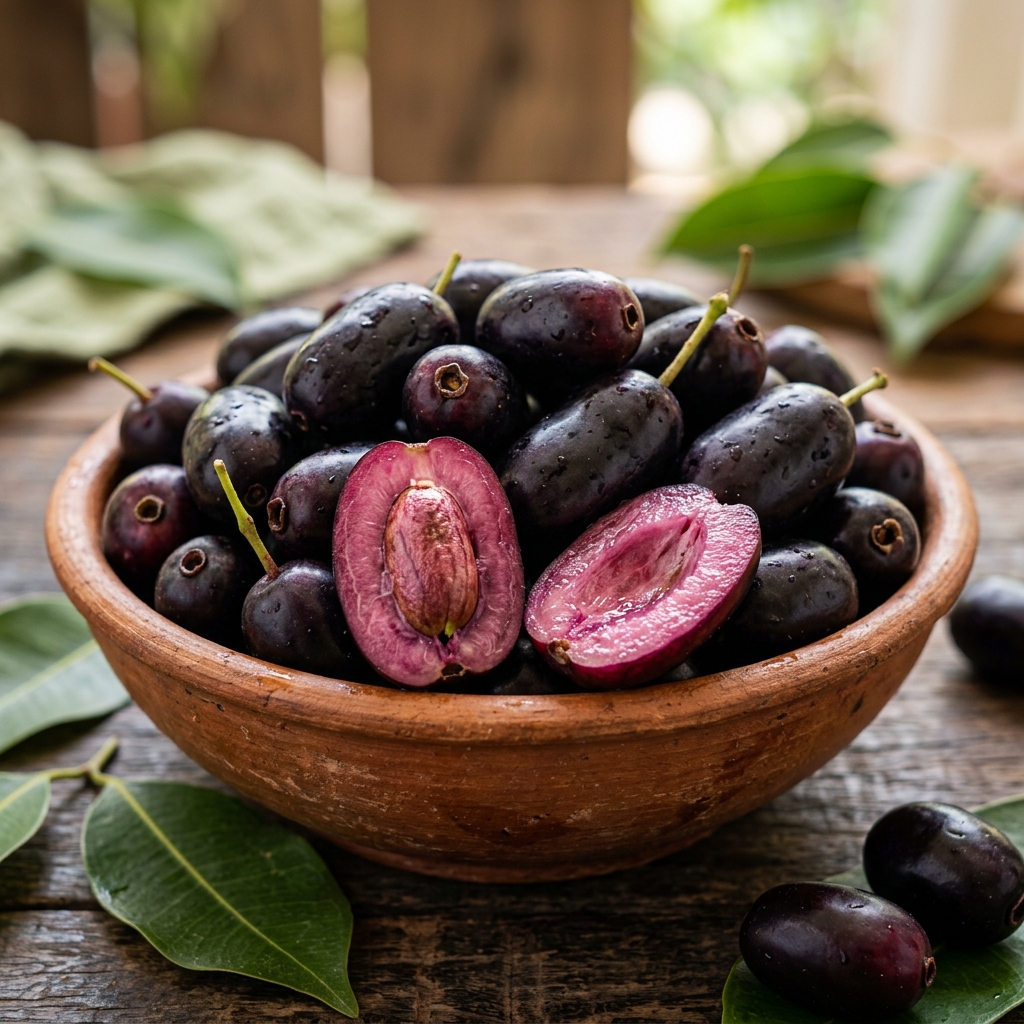
Choose glossy, deep-purple to black fruit with juicy flesh and a balanced sweet-tart taste. Remove the hard central seed before eating.
A small pinch of black salt (kala namak) and roasted cumin complements jamun's natural sweetness and astringency in a classic South Asian preparation.
Deseeded jamun can be blended into sherbet, juice, kala khatta, or refreshing seasonal smoothies. Watch added sugar in prepared beverages.
Jamun is delicate and highly perishable. Refrigerate ripe fruit promptly and use it within a few days for the best texture and flavor.
Traditional preparations and global recipes celebrating wholesome ingredients, balanced textures, and rich culinary heritage.
A popular South Asian summer drink made with fresh jamun pulp, roasted cumin, black salt, and lemon for a refreshing sweet-sour-spicy profile.
Fresh deseeded jamun pulp blended with chilled water, mint, and spices for a cooling seasonal beverage.
A tangy, sweet-tart condiment cooked with jamun pulp, cumin, ginger, and jaggery.
Ripe jamun pulp simmered with sugar and citrus to produce a rich, deep-violet spread.
A simple South Asian street-style snack that balances jamun's sweet, sour, and astringent notes with kala namak and roasted spices.
Jamun is a low-calorie seasonal fruit that provides vitamin C, potassium, and beneficial plant compounds including anthocyanins and polyphenols. It can be a nutritious addition to a varied diet, but it should not be treated as a replacement for medical treatment.
Fresh jamun can fit into many diabetes-friendly eating patterns, but the evidence that jamun itself treats diabetes is still limited. A 2026 systematic review of randomized trials found a modest reduction in fasting glucose across Syzygium and related Myrtaceae interventions, but no consistent significant benefit for HbA1c or post-meal glucose, and the certainty of evidence was low to very low.
Jamun seeds have a long history of traditional use, particularly in South Asian herbal medicine for blood-sugar management. Modern laboratory and clinical research has investigated seed and seed-derived preparations, but evidence is not strong enough to recommend jamun seed powder as a substitute for prescribed diabetes treatment.
A universally established glycemic-index value for fresh jamun is not available from standard USDA nutrition records. The fruit contains relatively little sugar by weight compared with many sweeter fruits, but glycemic response depends on the tested variety, ripeness, portion, and study method.
Jamun's dark skin and flesh contain water-soluble anthocyanin pigments. When you chew the fruit, these natural pigments temporarily stain proteins and tissues in the mouth, producing the characteristic purple color that fades harmlessly.
The hard central seed is not normally eaten with the fresh fruit and should be removed before serving. Concentrated seed preparations used in traditional medicine have a distinct phytochemical composition and should not be assumed to have the same effects or safety profile as fresh fruit.
Ripe jamun has a distinctive combination of sweet, mildly sour, and astringent flavors. Its dark purple skin and juicy flesh give it a unique flavor profile that is quite different from ordinary sweet berries.
Jamun is strongly seasonal in many South Asian growing regions, with harvesting commonly occurring during the monsoon around June and July. Exact timing varies with region, cultivar, and local climate.
Fresh jamun provides about 60 calories per 100g in the USDA reference entry and is high in water content (83.1g), making it a relatively light fruit choice. It can fit a weight-management eating plan, though no fruit directly causes fat loss.
Fresh jamun contributes water, dietary carbohydrates, and natural polyphenols. While tannins and polyphenols have been studied experimentally for gastrointestinal effects, human clinical evidence for treating diarrhea or digestive disorders remains limited.
Fresh jamun is a whole fruit containing water, natural carbohydrates, vitamin C, and polyphenols. Jamun seed powder is a concentrated preparation made from the seeds with a very different phytochemical profile and evidence base; research on seed extracts should not automatically be applied to fresh fruit.
Yes. Jamun is commonly blended into juice, sherbet, squash, chutney, jam, and the popular spiced drink Kala Khatta. Removing the hard seeds before blending makes the fruit easy to use in refreshing summer beverages.
Have a moment? Share your feedback or suggestions via Google to help us produce even higher quality, evidence-based nutrition guides.
No saved articles yet.
Click the bookmark button 🔖 inside any article to save it here for offline reading!

Hi! I am Mapple AI, your food science research companion. Ask me anything about biomolecules, organic diet patterns, or longevity recipes.