01
Vitality Moringa Green Smoothie
Explore Recipe GuideBlend 1 teaspoon of organic moringa leaf powder with frozen banana, sweet pineapple, baby spinach, and coconut water.
Moringa (Moringa oleifera), known as the drumstick tree or horseradish tree, is a drought-resistant tree native to the sub-Himalayan regions of India. Belonging to the Moringaceae family, moringa leaf powder is widely celebrated as one of the world’s most nutrient-dense botanical superfoods. Packed with bioavailable isothiocyanates (moringin), quercetin, chlorogenic acid, Vitamin A, Vitamin C, and non-heme plant iron, moringa offers exceptional benefits for systemic anti-inflammation, immune cell defense, and metabolic energy balance. Scientific reviews published in Phytotherapy Research validate moringa’s role in neutralizing oxidative stress and supporting healthy blood glucose regulation.
Moringa provides distinct bioactive properties through its unique glucosinolate compounds.
Note on Clinical Evidence: Scientific reviews (PMID 25808883) document small human trials showing 21% to 29% postprandial glucose reductions with whole moringa leaf powder, though exact metabolic pathways in humans remain under investigation.
The nutritional breakdown below represents official data from the USDA FoodData Central database for 100 grams of dried moringa leaf powder compared to 1 tablespoon of organic moringa powder (10g).
| Nutrient | Amount (per 100g) | Amount (per 1 tablespoon organic moringa leaf powder (10g)) | % Daily Value (%DV) | Why Your Body Needs It |
|---|---|---|---|---|
| Calories | 205 kcal | 20 kcal | — | Concentrated plant nutrient density |
| Total Carbohydrates | 38.2g | 3.8g | — | Prebiotic fiber & complex plant carbohydrates |
| Dietary Fiber | 19.2g | 1.9g | 7% | Soluble & insoluble fiber supporting gut motility |
| Total Sugars | 7.8g | 0.78g | — | Virtually sugar-free |
| Protein | 27.1g | 2.7g | 5% | Complete plant protein containing all essential amino acids |
| Glycemic Index (GI) | 15 (Low) | 15 (Low) | Low | Zero impact on blood glucose spikes |
| Iron | 28.2mg | 2.8mg | 16% | Concentrated plant iron for hemoglobin synthesis |
| Calcium | 2,003mg | 200mg | 15% | Exceptionally dense plant calcium for bone health |
| Vitamin A (Beta-Carotene) | 16,300µg | 1,630µg | 181% | Supports mucosal immunity & eye tissue health |
| Vitamin C | 17.3mg | 1.7mg | 2% | Antioxidant aiding plant non-heme iron absorption |
The reference matrix below outlines how fresh leaves and dried moringa powder fit into everyday health management, based on scientific reviews and dietary guidelines.
| Condition / Disease | Impact | General Guidance | Why (Mechanism + Verdict) |
|---|---|---|---|
| Immunity & Iron Deficiency | Positive | Take 1 tbsp powder daily | Strong evidence. 1 tbsp supplies 16% DV plant iron and 181% DV Vitamin A, supporting immune cell function and hemoglobin levels. |
| Blood Sugar Balance | Positive | Mix into morning meals | Good supportive evidence. Reviews of small human trials (PMID 25808883) document 21% to 29% reductions in post-meal blood glucose after moringa leaf powder intake. |
| Systemic Anti-Inflammation | Positive | Drink as tea or smoothie | Good supportive evidence. Isothiocyanates and quercetin in moringa reduce inflammatory markers in cellular models (PMID 25808883). |
| Pregnancy | Caution | Stick to leaf powder only | Avoid roots/bark. While moringa leaf powder is nutritious, pregnant women must avoid moringa root, bark, or seed extracts due to uterine contraction risks. |
Explore visual varieties and characteristics.
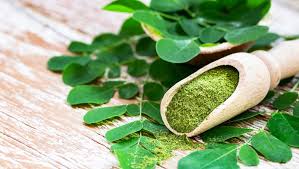
Moringa powder is nutrient-dense. Start with 1 teaspoon daily and gradually increase to 1 tablespoon to allow your digestive tract to adjust smoothly.
Pair moringa powder with fresh lemon juice or citrus fruits to convert non-heme plant iron into highly bioavailable ferrous iron.
Add moringa powder to soups, curries, or teas after removing from direct flame to preserve heat-sensitive isothiocyanates and Vitamin C.
Protect moringa powder from light, heat, and moisture in an opaque airtight jar to retain its vibrant green chlorophyll and antioxidant potency.
Traditional preparations and global recipes celebrating wholesome ingredients, balanced textures, and rich culinary heritage.
Blend 1 teaspoon of organic moringa leaf powder with frozen banana, sweet pineapple, baby spinach, and coconut water.
Whisk finely milled moringa leaf powder into warm water with freshly squeezed lemon juice and raw clover honey.
Traditional aromatic lentil stew cooked with fresh moringa pods (drumsticks), tamarind, tomatoes, and South Indian spices.
Warm rolled oats stirred with organic moringa powder, chia seeds, wild blueberries, and raw crushed walnuts.
According to Healthline and scientific studies, moringa powder is rich in moringin isothiocyanates, quercetin, plant iron, calcium, and Vitamin A. Taking moringa supports immune cell defense, blood sugar balance, and anti-inflammation.
Yes! Gram for gram, dried moringa leaf powder contains significantly higher concentrations of non-heme iron than fresh spinach, supplying **2.8mg of iron (16% DV)** per tablespoon.
Scientific reviews of human trials (PMID 25808883) show that whole moringa leaf powder reduces post-meal blood glucose levels by 21% to 29%, though the exact physiological mechanism in humans remains under active investigation.
No! Moringa is 100% caffeine-free. Its energizing reputation stems from its high iron, B-vitamins, and mineral density.
Culinary moringa *leaf powder* is nutritious, but pregnant women must avoid moringa root, bark, or seed extracts, which contain compounds that may trigger uterine contractions. Always consult a physician.
Have a moment? Share your feedback or suggestions via Google to help us produce even higher quality, evidence-based nutrition guides.
No saved articles yet.
Click the bookmark button 🔖 inside any article to save it here for offline reading!

Hi! I am Mapple AI, your food science research companion. Ask me anything about biomolecules, organic diet patterns, or longevity recipes.