01
Dragon Fruit Smoothie Bowl
Blend frozen red dragon fruit cubes with banana and almond milk, topped with chia seeds, coconut flakes, and fresh raspberries.
The most significant benefits of dragon fruit for health stem from its unique combination of natural prebiotic oligosaccharides and vibrant betalain antioxidants. Specifically, non-digestible oligosaccharides pass into the colon to feed beneficial gut bacteria, while betalains and polyphenol compounds protect vascular endothelial cells from oxidative stress. According to Healthline and systematic reviews published in PLoS One, regular consumption of pitaya fruit is linked to improved fasting blood glucose in prediabetes, enhanced intestinal microbiota diversity, and improved lipid markers.
Exploring the primary dragon fruit benefits (and the specific benefits of pitaya fruit) reveals why this exotic tropical cactus fruit is a cornerstone of modern prebiotic nutrition.
The following nutritional values represent the official analysis for this fruit, sourced directly from the USDA FoodData Central database for 100 grams of raw dragon fruit compared to a standard 1-cup serving (150g).
| Nutrient | Amount (per 100g) | Amount (per 1 cup cubed dragon fruit (150g)) | % Daily Value (%DV) | Why Your Body Needs It |
|---|---|---|---|---|
| Calories | 60 kcal | 90 kcal | — | Hydrating, nutrient-dense tropical energy |
| Total Carbs | 13.0g | 19.5g | 7% | Complex carbohydrates paired with prebiotic fiber |
| Sugar | 7.65g | 11.5g | — | Natural fruit fructose and glucose |
| Dietary Fiber | 2.9g | 4.35g | 16% | Prebiotic oligosaccharides supporting gut flora |
| Protein | 1.18g | 1.77g | 4% | Small natural plant protein contribution |
| Total Fat | 0.57g | 0.86g | 1% | Healthy omega polyunsaturated fatty acids from seeds |
| GI / GL | — | 48 / 4 | Low | Low glycemic impact preventing sugar spikes |
| Magnesium | 40mg | 60mg | 14% | Supports muscle relaxation and cellular metabolism |
| Iron | 1.9mg | 2.85mg | 16% | Essential for healthy red blood cells and oxygen transport |
| Vitamin C | 4.3mg | 6.45mg | 7% | Antioxidant supporting immune function and iron uptake |
| Potassium | 290mg | 435mg | 9% | Electrolyte for healthy blood pressure and fluid balance |
| Condition / Disease | Impact | General Guidance | Why (Mechanism + Verdict) |
|---|---|---|---|
| Prediabetes & Blood Sugar | Positive | Eat 1 cup fresh fruit daily | Systematic review proof. Meta-analysis (PMID: 28919692) demonstrated that pitaya consumption significantly reduces fasting blood glucose in prediabetic individuals. |
| Gut Microbiome (Prebiotic) | Positive | Eat daily as a gut tonic | Prebiotic oligosaccharides. Research (PMID: 20042427) shows pitaya oligosaccharides resist stomach acid, stimulating beneficial Bifidobacteria and Lactobacilli in the colon. |
| High Cholesterol | Positive | Consume flesh with seeds | Seed fatty acids & betalains. Tiny black seeds contain omega-3 and omega-6 fatty acids alongside betalain pigments that inhibit LDL oxidation (PMID: 24083567). |
| Weight Loss | Positive | Eat as a afternoon snack | High volume, low calorie. Supplies 4.35g fiber for just 90 calories per cup, promoting gastric distension and natural satiety. |
| Iron Deficiency & Anemia | Positive | Pair with citrus or berries | Plant-based iron source. Supplies 2.85mg iron (16% DV) per serving alongside natural Vitamin C to enhance non-heme iron intestinal absorption. |
| Pregnancy | Positive | Wash skin thoroughly; eat flesh | Safe & nutrient-dense. Supplies dietary iron, magnesium, and prebiotic fiber to prevent pregnancy-induced constipation naturally. |
| FODMAP Sensitivity (IBS) | Caution | Limit portion to 1/2 cup | Contains fructose oligosaccharides. High amounts of dragon fruit oligosaccharides can cause mild gas in sensitive IBS individuals. |
| Pets (Dogs) | Positive | Serve peeled flesh in cubes | Safe, healthy dog treat. The peeled soft flesh and seeds are non-toxic, providing gentle fiber and hydration for dogs. |
Explore visual varieties and characteristics.
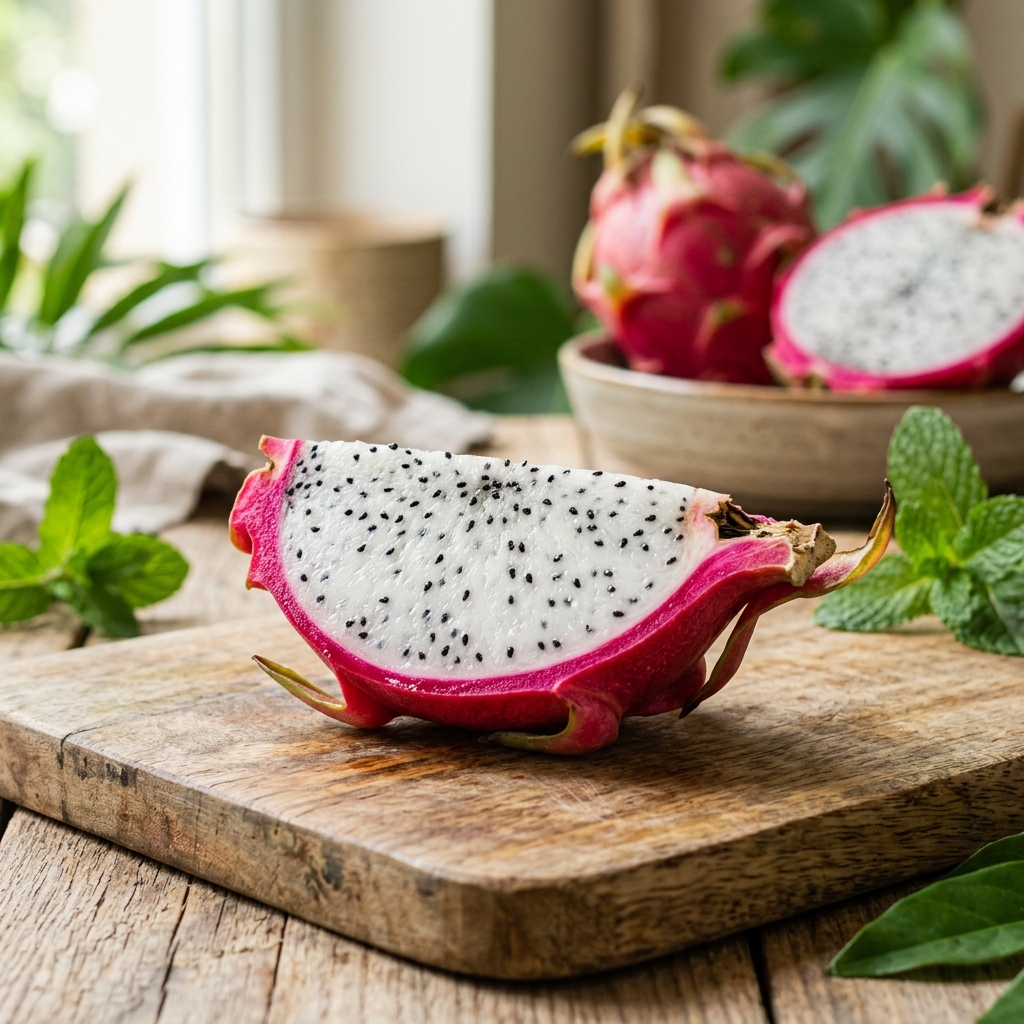
Consuming 1 cup of cubed dragon fruit (150g) daily is optimal to receive beneficial prebiotic oligosaccharides, 4.35g of dietary fiber, and 16% of daily iron.
Always peel the bright pink leathery skin before eating; the flesh and thousands of tiny black edible seeds should be consumed together as the seeds contain essential omega fatty acids.
Slice the fruit in half lengthways, slide a large spoon between the skin and fruit flesh, and scoop out the intact speckled sphere before chopping into cubes.
Always consume dragon fruit raw! High heat destroys delicate prebiotic oligosaccharide chains and degrades betalain antioxidant pigments.
Pair dragon fruit with Vitamin C rich citrus or kiwi to maximize the intestinal absorption of its non-heme iron and magnesium content.
Traditional preparations and global recipes celebrating wholesome ingredients, balanced textures, and rich culinary heritage.
Blend frozen red dragon fruit cubes with banana and almond milk, topped with chia seeds, coconut flakes, and fresh raspberries.
Toss diced white and red dragon fruit with kiwi slices, fresh mango, and lime juice for a vibrant, fiber-rich fruit salad.
Combine diced dragon fruit with finely chopped cucumber, jalapeño, cilantro, and lemon juice to top grilled fish or chicken.
Muddle fresh red pitaya flesh into brewed green tea with a dash of honey and lemon for an antioxidant-rich summer beverage.
According to Healthline and clinical studies, the benefits of dragon fruit for health include rich prebiotic oligosaccharides, dietary fiber, magnesium, and iron. Eating 1 cup of dragon fruit (150g) delivers **4.35g of fiber** and **60mg of magnesium (14% DV)**, which clinical research (PMID: 20042427) proves feeds beneficial *Bifidobacteria* in your gut colon.
A systematic review and meta-analysis published in *PLoS One* (PMID: 28919692) demonstrated that consuming pitaya fruit significantly reduces fasting blood glucose levels in prediabetic individuals by improving insulin sensitivity and slowing carbohydrate absorption.
According to the USDA FoodData Central database, a 1-cup serving of raw cubed dragon fruit (150g) provides **90 calories**, **4.35g of dietary fiber**, **11.5g of natural fruit sugar**, **2.85mg of iron (16% DV)**, **60mg of magnesium (14% DV)**, and **435mg of potassium (9% DV)** with a Low Glycemic Load (GL 4).
Yes! The tiny black seeds scattered throughout dragon fruit flesh are 100% edible and highly nutritious. They provide healthy omega-3 and omega-6 polyunsaturated fatty acids, extra insoluble fiber, and protective antioxidants.
Red-fleshed dragon fruit contains vibrant magenta pigments called **betalains** (the same powerful antioxidants found in red beets), offering higher antioxidant activity than white-fleshed pitaya. Both varieties provide identical prebiotic fiber, iron, and magnesium content.
Have a moment? Share your feedback or suggestions via Google to help us produce even higher quality, evidence-based nutrition guides.
No saved articles yet.
Click the bookmark button 🔖 inside any article to save it here for offline reading!

Hi! I am Mapple AI, your food science research companion. Ask me anything about biomolecules, organic diet patterns, or longevity recipes.