01
Raw Red Onion & Cucumber Mediterranean Salad
Explore Recipe GuideThinly sliced crisp red onions and cucumbers tossed with extra virgin olive oil, lemon juice, Greek feta cheese, and oregano.
Onions (Allium cepa) are foundational culinary vegetables cultivated across virtually every human culture. Belonging to the Amaryllidaceae allium family alongside garlic and leeks, onions are exceptionally rich in quercetin (a potent antioxidant flavonoid), organosulfur compounds, and prebiotic inulin fibers. Clinical trials published in The Journal of Nutrition and The American Journal of Clinical Nutrition demonstrate that onion quercetin promotes arterial vasodilation, reduces blood pressure in hypertensive individuals, and acts as a natural antihistamine and immune modulator.
Onions provide distinct health mechanisms through their outer-layer flavonoids and digestive fibers.
Note on Clinical Evidence: Clinical trials (PMID 17951477) evaluated high-dose quercetin supplements (730mg daily). While onion quercetin glucosides are absorbed 52% more efficiently than aglycone powder (PMID 7491892), dietary onions supply lower daily amounts (~30mg-100mg per 100g).
The nutritional breakdown below represents official data from the USDA FoodData Central database for 100 grams of raw onion compared to 1 medium fresh raw onion (110g).
| Nutrient | Amount (per 100g) | Amount (per 1 medium fresh raw onion (110g)) | % Daily Value (%DV) | Why Your Body Needs It |
|---|---|---|---|---|
| Calories | 40 kcal | 44 kcal | — | Low-calorie culinary & bioactive staple |
| Water Content | 89.1g | 98.0g | — | High cellular hydration |
| Total Carbohydrates | 9.34g | 10.3g | — | Complex carbohydrates rich in prebiotic fructans |
| Dietary Fiber | 1.7g | 1.9g | 7% | Inulin & oligofructose fiber feeding gut microbiome |
| Total Sugars | 4.24g | 4.66g | — | Natural root sugars paired with fiber |
| Protein | 1.1g | 1.21g | 2% | Supplies basic plant amino acids |
| Glycemic Index (GI) | 15 (Low) | 15 (Low) | Low | Zero impact on blood sugar spikes |
| Quercetin Flavonoid | 30mg - 100mg | 33mg - 110mg | — | Concentrated antioxidant supporting vascular health |
| Vitamin C | 7.4mg | 8.1mg | 9% | Antioxidant protecting quercetin from degradation |
| Folate (Vitamin B9) | 19µg | 21µg | 5% | Supports DNA methylation & cell division |
| Potassium | 146mg | 161mg | 3% | Key electrolyte supporting blood pressure regulation |
The reference matrix below outlines how raw and cooked onions fit into everyday health management, based on clinical trials and dietary guidelines.
| Condition / Disease | Impact | General Guidance | Why (Mechanism + Verdict) |
|---|---|---|---|
| High Blood Pressure (Hypertension) | Positive | Eat 1/2 medium onion daily | Good supportive clinical evidence. High-dose quercetin supplements (730mg daily) significantly lower blood pressure in stage-1 hypertensive adults (PMID 17951477). Dietary onions supply lower daily amounts, though onion quercetin glucosides exhibit high gut bioavailability (PMID 7491892). |
| Prebiotic Gut Health | Positive | Enjoy raw or cooked | Strong evidence. Rich in inulin and FOS fibers that nourish beneficial gut bacteria and generate anti-inflammatory SCFAs. |
| Immunity & Seasonal Allergies | Positive | Include in daily meals | Good supportive evidence. Quercetin acts as a natural mast-cell stabilizer, dampening histamine responses and supporting immune defense. |
| IBS / Low-FODMAP Diet | Caution | Limit if FODMAP sensitive | High-FODMAP food. Onions are high in fermentable fructans. Those on a strict low-FODMAP diet for IBS should avoid raw onions. |
| Pets (Dogs & Cats) | Toxic | Keep completely away from pets | Toxic to pets. Onions contain N-propyl disulfide, which destroys red blood cells (hemolytic anemia) in dogs and cats. |
Explore visual varieties and characteristics.
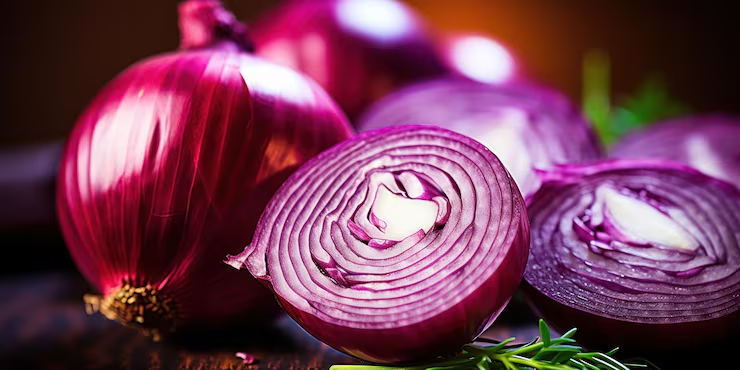
The highest quercetin concentrations reside in the outermost fleshy layers. Remove only the papery skin to retain maximum antioxidants.
Red and yellow onions contain significantly higher quercetin concentrations than sweet or white onions, plus anthocyanins in red skins.
Quercetin is heat-stable and water-soluble. Simmering washed outer onion skins infuses broths with bioavailable flavonoids.
Keep all onions, shallots, garlic, and leeks away from dogs and cats to avoid dangerous red blood cell destruction.
Traditional preparations and global recipes celebrating wholesome ingredients, balanced textures, and rich culinary heritage.
Thinly sliced crisp red onions and cucumbers tossed with extra virgin olive oil, lemon juice, Greek feta cheese, and oregano.
Slow-caramelized yellow onions simmered in savory broth with fresh thyme, bay leaves, and a touch of aged balsamic.
Simmered whole onions, leeks, and washed outer onion skins with aromatic root herbs for a rich mineral-dense stock.
Diced raw red onions, vine-ripened tomatoes, fresh cilantro, and jalapeños tossed with fresh lime juice.
According to Healthline and clinical studies, onions are rich in quercetin, organosulfur compounds, inulin fiber, and Vitamin C. Eating onions supports blood pressure reduction, prebiotic gut health, and immune function.
**Red and yellow onions** contain the highest quercetin levels! Red onions also supply anthocyanin pigments, giving them double antioxidant power.
Yes! Double-blind clinical trials (PMID 17951477) prove that quercetin supplementation reduces systolic blood pressure by **7 mmHg** in hypertensive subjects.
Both have distinct benefits! Raw onions preserve heat-sensitive organosulfurs and Vitamin C. However, cooked onions retain heat-stable quercetin and soften prebiotic inulin for easier digestion.
When you slice an onion, plant cells release syn-propanethial-S-oxide, a volatile sulfur gas that reacts with eye moisture to form mild sulfuric acid, triggering tearing.
Have a moment? Share your feedback or suggestions via Google to help us produce even higher quality, evidence-based nutrition guides.
No saved articles yet.
Click the bookmark button 🔖 inside any article to save it here for offline reading!
Hi! I am Mapple AI, your food science research companion. Ask me anything about biomolecules, organic diet patterns, or longevity recipes.