01
Garlic & Olive Oil Sautéed Spinach
Explore Recipe GuideSauté fresh baby spinach leaves in cold-pressed extra virgin olive oil with thinly sliced garlic and a pinch of sea salt.
Spinach is widely recognized as one of the most nutrient-dense green leafy vegetables on Earth. Native to ancient Persia, spinach is packed with essential Vitamin K1, Vitamin A (beta-carotene), Folate (Vitamin B9), iron, and Vitamin C. Clinical trials published in Investigative Ophthalmology & Visual Science, Free Radical Biology & Medicine, and Appetite demonstrate that dietary spinach supplies high levels of specialized xanthophyll carotenoids—lutein and zeaxanthin—which accumulate in the macula of the human eye to build optical pigment density and filter harmful high-energy blue light.
Spinach provides distinct health mechanisms depending on whether it is consumed raw in salads or cooked.
Note on Clinical Evidence: Studies on thylakoids and GLP-1 satiety (such as PMID 24993695) utilized a concentrated spinach thylakoid extract supplement (5g). While whole spinach naturally contains thylakoid membranes inside its chloroplasts, culinary portions supply lower concentrations than the laboratory extract studied.
The nutritional breakdown below represents official data from the USDA FoodData Central database for 100 grams of raw spinach compared to 1 cup of fresh raw spinach leaves (30g).
| Nutrient | Amount (per 100g) | Amount (per 1 cup raw fresh spinach leaves (30g)) | % Daily Value (%DV) | Why Your Body Needs It |
|---|---|---|---|---|
| Calories | 23 kcal | 7 kcal | — | Exceptionally light, nutrient-dense green energy |
| Water Content | 91.4g | 27.4g | — | Delivers deep cellular hydration |
| Total Carbohydrates | 3.6g | 1.1g | — | Low-carb vegetable rich in insoluble plant fiber |
| Dietary Fiber | 2.2g | 0.7g | 3% | Supports smooth intestinal transit and gut motility |
| Total Sugars | 0.4g | 0.1g | — | Virtually sugar-free |
| Total Fat | 0.39g | 0.12g | <1% | Virtually fat-free |
| Protein | 2.86g | 0.86g | 2% | High natural protein ratio for a green vegetable |
| Glycemic Index (GI) | 15 (Low) | 15 (Low) | Low | Zero impact on blood glucose levels |
| Lutein + Zeaxanthin | 12,198µg (12.2mg) | 3,659µg | — | Concentrated carotenoids that protect retinal tissue |
| Vitamin K1 | 483µg | 145µg | 121% | Crucial for blood clotting and bone mineralization |
| Vitamin A (Beta-Carotene) | 469µg RAE | 141µg RAE | 16% | Essential for night vision, skin integrity, and immunity |
| Folate (Vitamin B9) | 194µg | 58µg | 15% | Essential for DNA repair and fetal tissue growth |
| Vitamin C | 28.1mg | 8.4mg | 9% | Supports collagen synthesis and immune defense |
| Iron | 2.71mg | 0.81mg | 5% | Plant non-heme iron for oxygen transport |
The reference matrix below outlines how fresh and cooked spinach fits into everyday health management, based on clinical trials and dietary guidelines.
| Condition / Disease | Impact | General Guidance | Why (Mechanism + Verdict) |
|---|---|---|---|
| Eye & Vision Protection | Positive | Eat 1 cup cooked daily | Strong clinical evidence. Lutein and zeaxanthin accumulate in retina tissue, building blue light defense and reducing eye fatigue. |
| High Blood Pressure | Positive | Include in daily meals | Strong clinical evidence. A randomized trial (PMID 22019438) proved that nitrate-rich spinach increases serum nitric oxide, supporting arterial relaxation. |
| Calcium Oxalate Kidney Stones | Caution | Boil; discard cooking water | Requires portion tracking. Raw spinach is high in oxalates. Boiling and discarding water reduces soluble oxalates by up to 87% (PMID 15826055), whereas steaming yields 5–53%. |
| Diabetes & Blood Sugar | Positive | Enjoy freely | Excellent choice. Low GI (15), high fiber, and thylakoid membranes help prevent post-meal glucose spikes. |
| Weight Loss & Appetite Control | Positive | Use as meal volume filler | Strong supportive evidence. Thylakoid membranes stimulate GLP-1 satiety hormones, helping curb sweet cravings (PMID 24993695). |
| Bone Density & Mineralization | Positive | Pair cooked spinach with fat | Good supportive evidence. 1 cup raw supplies 121% DV of Vitamin K1, essential for activating osteocalcin to bind calcium in bones. |
| Pregnancy | Positive | Wash raw; eat cooked | Nourishing option. 1 cup raw supplies 15% DV of natural Folate (B9), vital for neural tube development in early fetal growth. |
| Pets (Dogs) | Positive | Small steamed portions only | Safe in small bites. Small amounts of plain steamed spinach are safe for dogs. Avoid feeding large raw amounts due to oxalate content. |
| Gout & Uric Acid | Caution | Moderate daily portions | Moderate purines. Contains moderate plant purines; safe in standard dietary amounts, but portion tracking is advised for severe gout. |
Explore visual varieties and characteristics.
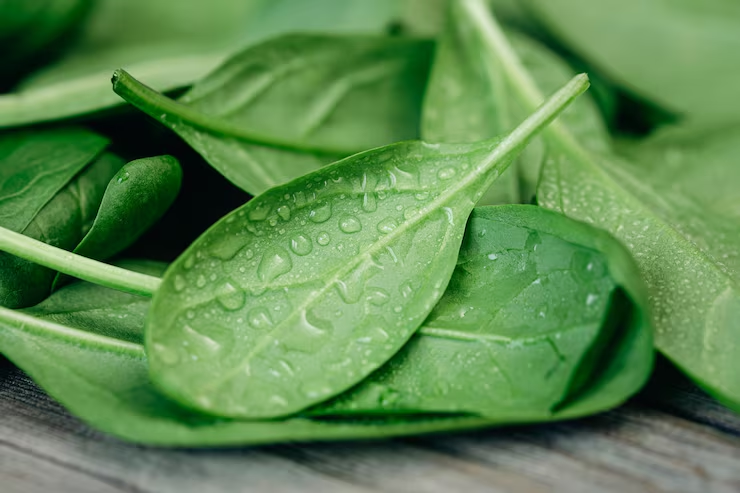
Lutein and zeaxanthin are fat-soluble. Sautéing spinach in extra virgin olive oil or avocado oil significantly boosts carotenoid absorption across your gut wall.
If you are prone to calcium oxalate kidney stones, boiling spinach and discarding the cooking water reduces soluble oxalates by up to 87% (PMID 15826055).
Plant iron in spinach is non-heme. Squeezing fresh lemon juice over cooked spinach converts ferric iron into ferrous iron, substantially boosting absorption.
Keep unwashed spinach in a dry paper towel-lined container in your fridge crisper drawer to prevent moisture buildup and preserve Vitamin C for up to 5 days.
Traditional preparations and global recipes celebrating wholesome ingredients, balanced textures, and rich culinary heritage.
Sauté fresh baby spinach leaves in cold-pressed extra virgin olive oil with thinly sliced garlic and a pinch of sea salt.
Blend fresh baby spinach leaves with crisp green apple, cucumber slices, fresh lemon juice, and hydrating coconut water.
Tender sautéed spinach, sliced mushrooms, and Greek feta folded into whisked eggs for a lutein-rich morning meal.
Blanched fresh whole-leaf spinach drained to reduce oxalates, generously dressed with olive oil and freshly squeezed lemon.
According to Healthline and clinical studies, spinach is rich in lutein, zeaxanthin, Vitamin K1, Folate, and natural nitrates. Eating spinach supports eye vision, arterial blood pressure, satiety, and bone health.
Both have unique benefits! Cooking spinach breaks down plant cell walls to unlock **lutein**. Boiling spinach reduces soluble oxalates by up to 87%, while steaming offers a 5% to 53% reduction (PMID 15826055). However, raw spinach preserves heat-sensitive Vitamin C and Folate. Eating a mix of raw and cooked spinach is ideal.
Lutein and zeaxanthin accumulate in your eye's retina and macula, forming a protective pigment shield that absorbs high-energy blue light and protects delicate photoreceptors from oxidative stress (PMID 9286268).
Yes, with proper cooking! Raw spinach is high in oxalates. Boiling spinach and discarding the cooking water reduces soluble oxalates by up to 87% (PMID 15826055), making it much safer than eating raw spinach in large quantities.
Yes! Spinach is rich in natural dietary nitrates. A randomized clinical trial (PMID 22019438) showed that eating nitrate-rich spinach significantly increases serum nitric oxide levels, promoting arterial vasodilation and healthy blood pressure.
Have a moment? Share your feedback or suggestions via Google to help us produce even higher quality, evidence-based nutrition guides.
No saved articles yet.
Click the bookmark button 🔖 inside any article to save it here for offline reading!

Hi! I am Mapple AI, your food science research companion. Ask me anything about biomolecules, organic diet patterns, or longevity recipes.