01
Traditional Persian Fesenjān (Pomegranate Walnut Stew)
An ancient Persian stew featuring slow-simmered ground walnuts and rich pomegranate molasses cooked with lean poultry.
Pomegranate (Punica granatum) is one of the most chemically unique and potent functional fruits in human medical history. Revered across ancient Persian, Greek, Biblical, and Ayurvedic cultures, this ruby-red crown-topped fruit is filled with hundreds of juicy, jewel-like seed pods called arils.
Modern cardiovascular research confirms that pomegranate is an unmatched source of punicalagins—large water-soluble hydrolyzable tannins unique to pomegranate—alongside ellagic acid, punicic acid (omega-5 conjugated fatty acid), anthocyanins, and gut-derived urolithin A.
Exploring pomegranate benefits (and general pomegranate health benefits) reveals how daily pomegranate intake reverses carotid artery plaque buildup, lowers systolic blood pressure, reduces serum LDL oxidation, and enhances mitochondrial mitophagy according to 3-year human clinical trials.
The extraordinary medical power of pomegranate is confirmed by long-term clinical human trials across three main biological pathways:
In a landmark 3-year clinical trial published in Clinical Nutrition (Aviram et al. 2004, PMID: 15158307), patients with severe carotid artery stenosis (narrowing of the main neck arteries carrying blood to the brain) supplemented their diet with daily pomegranate juice for up to 3 years:
In clinical trials published in Phytotherapy Research (Asgary et al. 2017, PMID: 28696280), drinking pure pomegranate juice produced significant drops in systolic and diastolic blood pressure in diabetic and hypertensive patients. Punicalagins and anthocyanins act as natural inhibitors of Angiotensin-Converting Enzyme (ACE)—the exact enzyme targeted by prescription ACE-inhibitor blood pressure medications.
Pomegranate punicalagins are too large to be absorbed directly in the stomach. When they reach the large intestine, specific gut bacterial species (Gordonibacter urolithinfaciens) ferment punicalagins and ellagic acid into bioactive Urolithin A. Urolithin A crosses the intestinal barrier into circulation, where it stimulates mitophagy—the selective recycling of damaged cellular mitochondria—promoting youthful cellular energy and muscle strength.
The nutritional breakdown below represents official data from the USDA FoodData Central database for 100 grams of fresh raw pomegranate arils compared to 1/2 cup of arils (87g):
| Nutrient | Amount (per 100g) | Amount (per ½ cup fresh pomegranate arils (87g)) | % Daily Value (%DV) | Why Your Body Needs It |
|---|---|---|---|---|
| Calories | 83 kcal | 72 kcal | — | Dense, polyphenol-rich fruit energy |
| Total Carbs | 18.7g | 16.3g | 6% | Carbohydrates encapsulated in seed fiber |
| Sugars | 13.7g | 11.9g | — | Natural fructose and glucose sweetness |
| Dietary Fiber | 4.0g | 3.5g | 14% | Insoluble seed fiber & soluble pectin |
| Protein | 1.67g | 1.45g | 3% | Essential plant amino acids |
| Total Fat | 1.17g | 1.02g | 2% | Punicic acid (omega-5) in seed oils |
| GI / GL | — | 53 / 7 | Low-to-Med | Low Glycemic Load due to fiber matrix |
| Vitamin C | 10.2mg | 8.9mg | 15% | Immune defense & endothelial protection |
| Vitamin K | 16.4µg | 14.3µg | 14% | Vascular calcium regulation & bone matrix |
| Folate (B9) | 38µg | 33µg | 8% | Cellular division & red blood cell formation |
| Potassium | 236mg | 205mg | 5% | Relaxes arterial smooth muscle |
| Copper | 0.16mg | 0.14mg | 16% | Red blood cell synthesis & iron transport |
The clinical reference matrix below details how fresh pomegranate arils and pure juice impact major cardiovascular and metabolic conditions based on published long-term human trials:
| Condition / Focus Area | Impact | General Guidance | Why (Mechanism + Verdict) |
|---|---|---|---|
| Carotid Plaque & Atherosclerosis | Positive | Drink 50-100ml pure juice daily | 3-Year Clinical Proof. Famous trial (PMID: 15158307) proved 1 year of pomegranate juice reduced carotid artery intima-media thickness by 30% and lowered LDL oxidation by 90%. |
| High Blood Pressure | Positive | Drink 8oz pure juice or eat arils | ACE Inhibitor Mechanism. Clinical trials (PMID: 28696280) show pomegranate juice inhibits Angiotensin-Converting Enzyme (ACE), lowering systolic BP by 5 to 8 mmHg. |
| Diabetes / Blood Sugar | Positive | Eat fresh arils instead of juice | Low Glycemic Load (GL 7). Fresh aril fiber slows fructose absorption. Punicalagins improve insulin receptor sensitivity in peripheral tissues. |
| High Cholesterol | Positive | Eat arils daily in season | Potent Anti-Peroxidation. Punicalagins scavenge free radicals, protecting circulating LDL cholesterol from turning into toxic, plaque-forming oxidized LDL. |
| Weight Loss | Positive | Excellent crunchy dessert | Volumetric satiety. Delivering 4.0g fiber per 100g with a crunch, fresh arils expand in the stomach and slow gastric emptying. |
| Pregnancy | Positive | Wash exterior; eat fresh arils | Placental Vascular Defense. Delivers 14.3µg Vitamin K, 38µg Folate, and punicalagins that protect placental blood vessels from oxidative stress. |
| Gut Health & Mitophagy | Positive | Eat whole arils daily | Urolithin A Generation. Gut bacteria convert pomegranate ellagitannins into Urolithin A, a compound that triggers cellular mitophagy (mitochondrial rejuvenation). |
| Kidney Disease (CKD) | Positive | Safe in standard portions | Proven renal protection. 1-year clinical trial in hemodialysis patients (PMID: 22609423) showed reduced oxidative stress, lower BP, and fewer hospitalizations. |
| Oral & Dental Health | Positive | Rinse mouth after juice | Antibacterial polyphenols. Punicalagins inhibit Streptococcus mutans oral plaque bacteria, though juice acids require post-meal water rinsing. |
| Pets (Dogs) | Avoid | Do not feed to dogs | Stomach Upset Risk. High tannin concentration causes acute stomach pain, vomiting, and diarrhea in canine digestive systems. |
| IBS (FODMAPs) | Caution | Limit to 2 tablespoons arils | High Fructose. Contains excess natural fructose, which can trigger gas or osmotic diarrhea in individuals with severe fructose malabsorption. |
Explore visual varieties and characteristics.
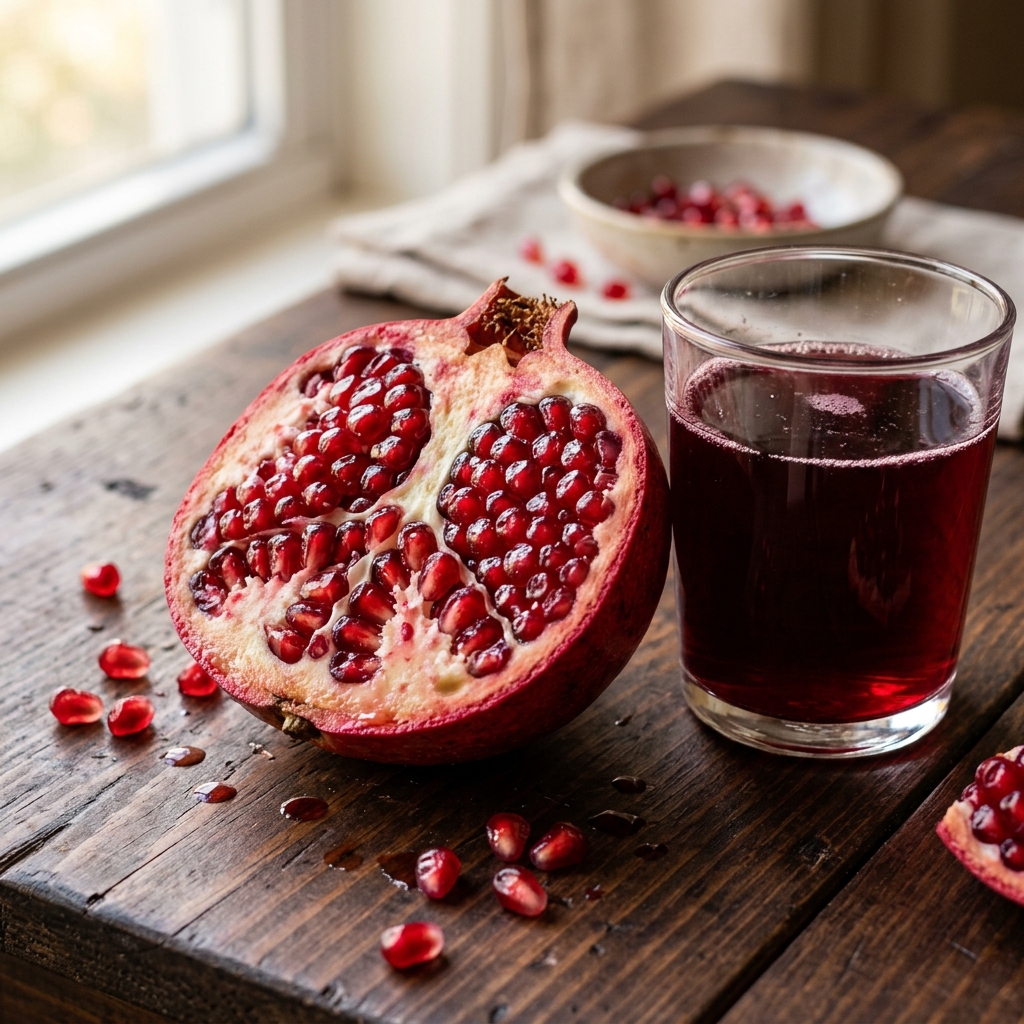
Score the outer rind into quarters, submerge in a bowl of cold water, and break open sections; heavy ruby arils sink to the bottom while white bitter pith floats to the top.
Eat whole arils for intact dietary fiber (4g/100g) and lower glycemic response; use small servings (50 to 100ml) of 100% pure unsweetened juice for concentrated punicalagins.
Toss pomegranate arils into salads with extra virgin olive oil, walnuts, or avocado to support the absorption of fat-soluble antioxidant bioactives.
Whole uncut pomegranates store in the refrigerator crisper drawer for up to 2 months; fresh extracted arils remain fresh in an airtight container for 5 to 7 days.
Traditional preparations and global recipes celebrating wholesome ingredients, balanced textures, and rich culinary heritage.
An ancient Persian stew featuring slow-simmered ground walnuts and rich pomegranate molasses cooked with lean poultry.
A vibrant roasted red pepper and walnut spread flavored with pomegranate molasses, Aleppo pepper, and garlic.
Fluffy quinoa tossed with fresh ruby pomegranate arils, baby spinach, toasted pistachios, and fresh mint with lemon dressing.
Freshly pressed pure pomegranate juice mixed with sparkling mineral water, fresh lime wedges, and crushed ice.
Pomegranate contains punicalagins—unique polyphenols that increase PON1 enzyme activity (PMID: 15158307). PON1 breaks down oxidized LDL cholesterol in blood vessel walls, reversing carotid artery intima-media thickness by up to 30% and lowering systolic blood pressure.
Fresh pomegranate arils deliver 4.0g of dietary fiber per 100g, providing a lower Glycemic Load (GL 7) that is ideal for weight loss and blood sugar management. Pure pomegranate juice offers concentrated punicalagins for rapid cardiovascular absorption, but lacks fiber.
Urolithin A is a anti-aging metabolite produced when your gut microbiome ferments pomegranate punicalagins and ellagic acid. Urolithin A triggers mitophagy—the process of clearing old, damaged mitochondria from cells to promote tissue longevity.
People with diabetes can drink **50ml to 100ml of 100% pure pomegranate juice**, ideally taken with a meal containing protein or healthy fats. Clinical trials (PMID: 28696280) show that 100% pure pomegranate juice does not negatively impact fasting blood glucose when consumed in controlled portions.
Yes, pomegranate is exceptionally healthy! In fact, it is one of the most nutrient-dense fruits on earth. Half a cup of fresh pomegranate aril seeds (87 grams) contains only **72 calories** and **3.5 grams of dietary fiber**, while delivering **15% of your daily Vitamin C**, 14% of your daily Vitamin K, and 205mg of potassium. What makes pomegranate especially healthy are its unique antioxidants called **punicalagins**. 3-year clinical trials (PMID 15158307) proved that drinking pure pomegranate juice helps lower blood pressure, protects bad cholesterol from oxidizing, and can even reduce arterial plaque buildup by up to 30%!
Have a moment? Share your feedback or suggestions via Google to help us produce even higher quality, evidence-based nutrition guides.
No saved articles yet.
Click the bookmark button 🔖 inside any article to save it here for offline reading!

Hi! I am Mapple AI, your food science research companion. Ask me anything about biomolecules, organic diet patterns, or longevity recipes.